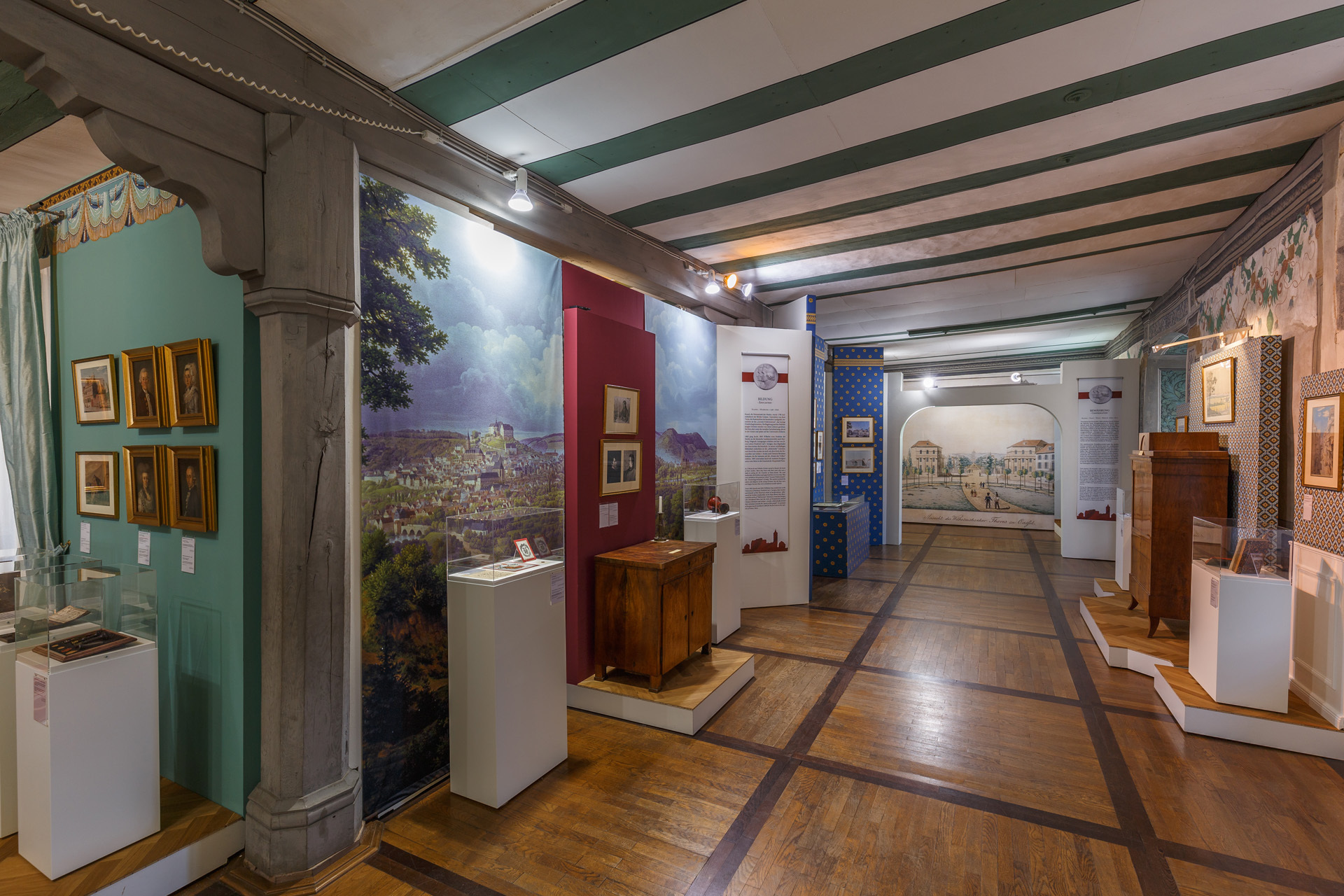
Display Rooms and Grimm Exhibition
The Counts of Hanau-Münzenberg had the interiors of the palace magnificently decorated. The high-quality wall paintings with Renaissance ornaments and antique portrait medallions adorned the halls and flats. A vivid insight into the reconstructed palace furnishings is provided by the Hofstube with its portraits of the nobility from the 16th century. The adjacent castle kitchen is furnished with replicas of various food dummies as well as cooking utensils from the 19th century; it brings to life the everyday life of the palace inhabitants from earlier centuries.
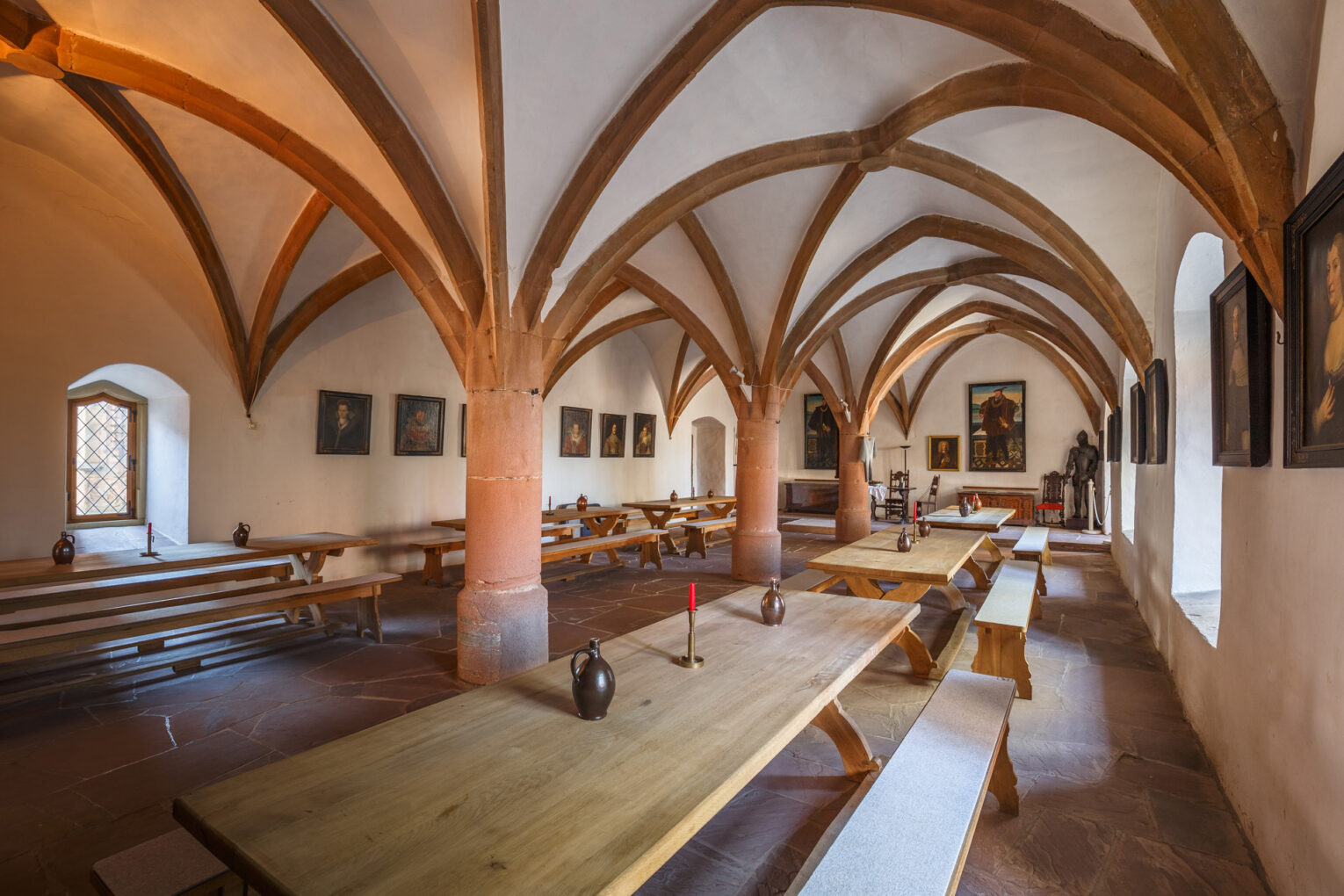
The rustic courtyard parlour with ancestral gallery is also available for rent.
Foto: Michael Leukel, 2019
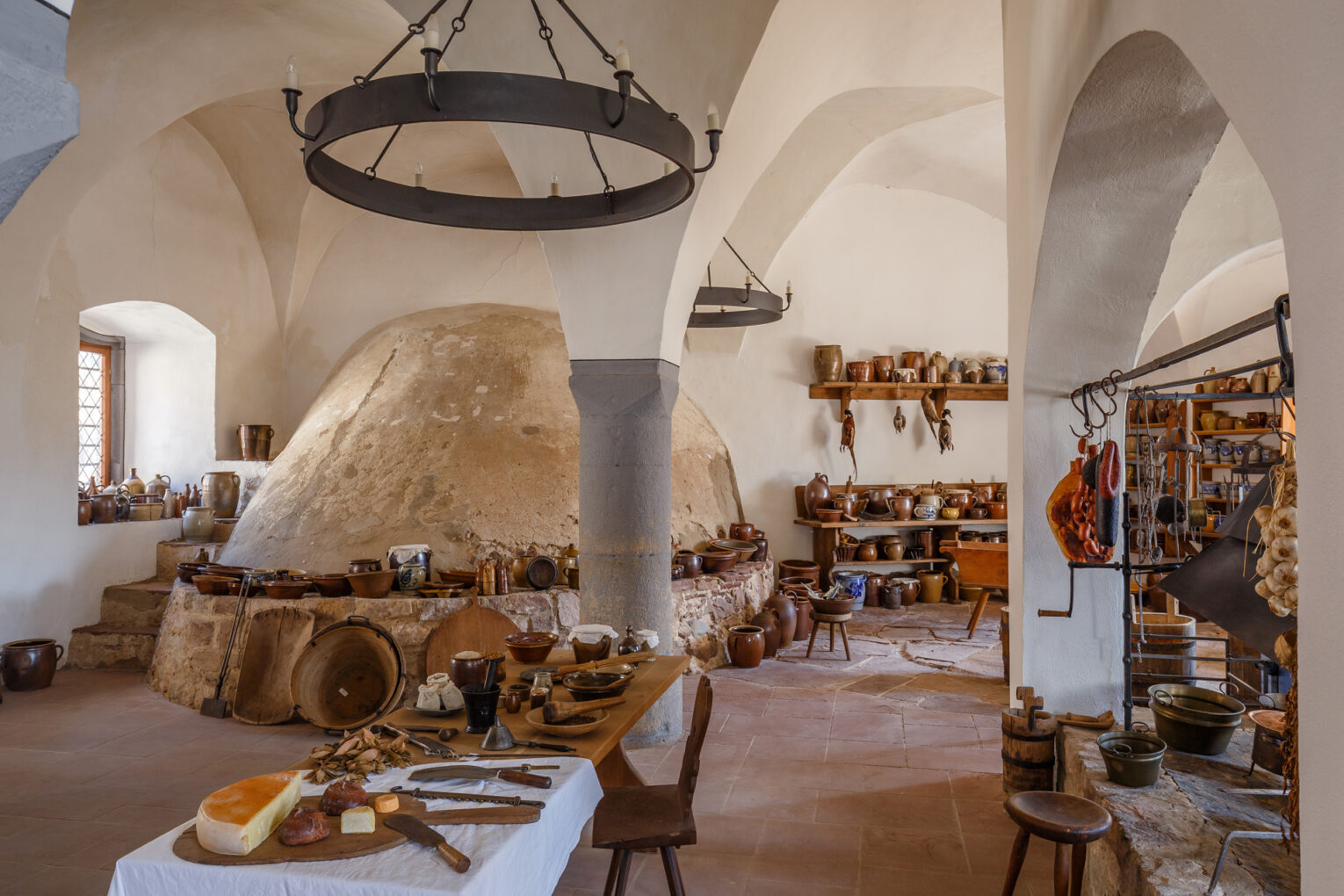
A court kitchen richly equipped with materials awaits visitors on a tour of the palace.
Foto: Michael Leukel, 2019
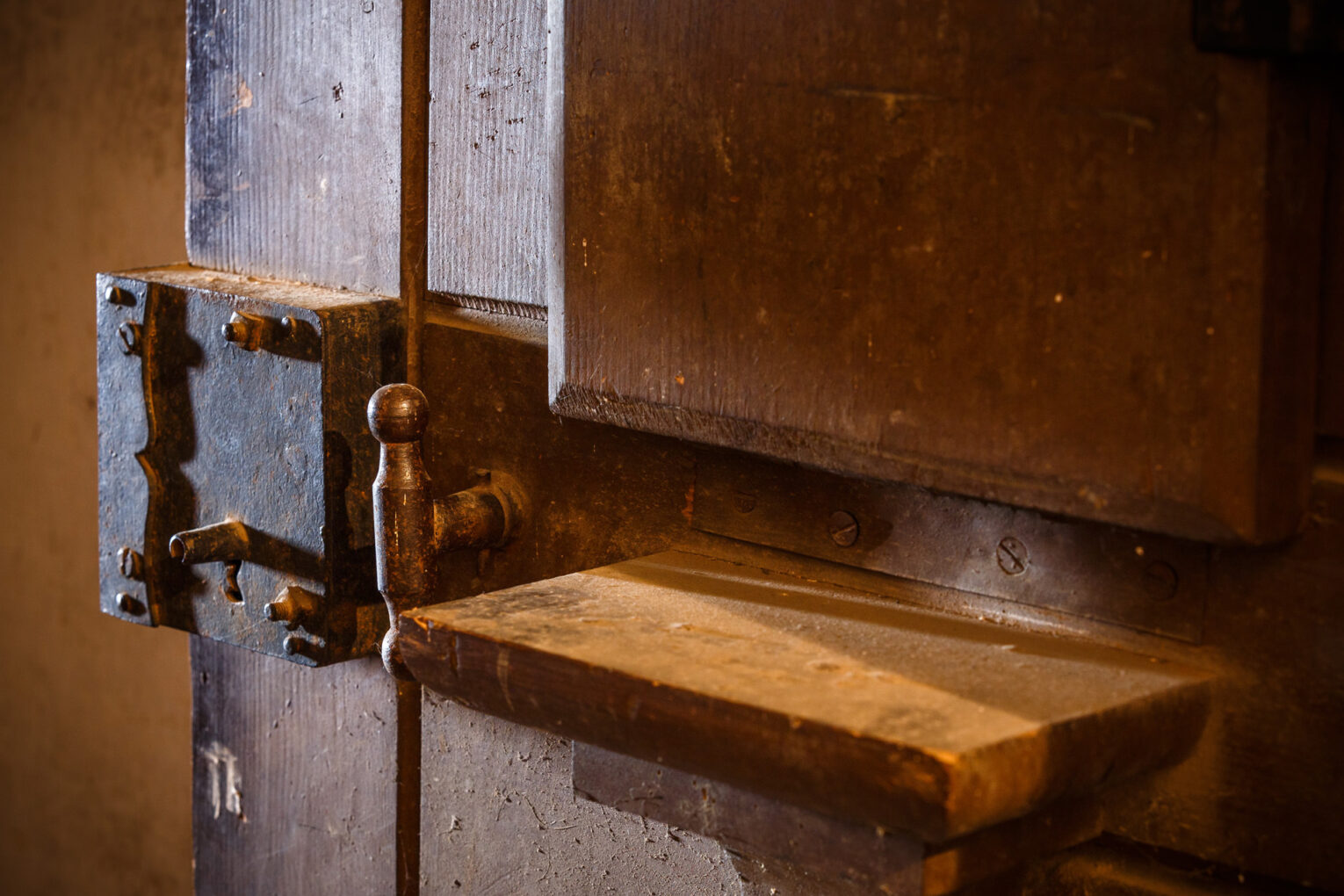
Detail of a historical door in the kitchen building.
Foto: Michael Leukel, 2019
Since 2015, a permanent exhibition on the Brothers Grimm can be visited on the upper floor of the castle. The exhibition was realised by the State Palaces and Gardens in cooperation with the Brothers Grimm Society (Kassel). The brothers spent their childhood in Steinau and later recorded this time in their memories and writings. In the exhibition, significant exhibits from the Grimm family estate can be viewed, including unique family portraits, everyday objects, such as a family Bible, a snuff box or Jacob Grimm’s inkpot. The presentation is complemented by furniture, busts and graphics. A large part of the exhibition is devoted to the Grimm children’s and household tales and their sources.
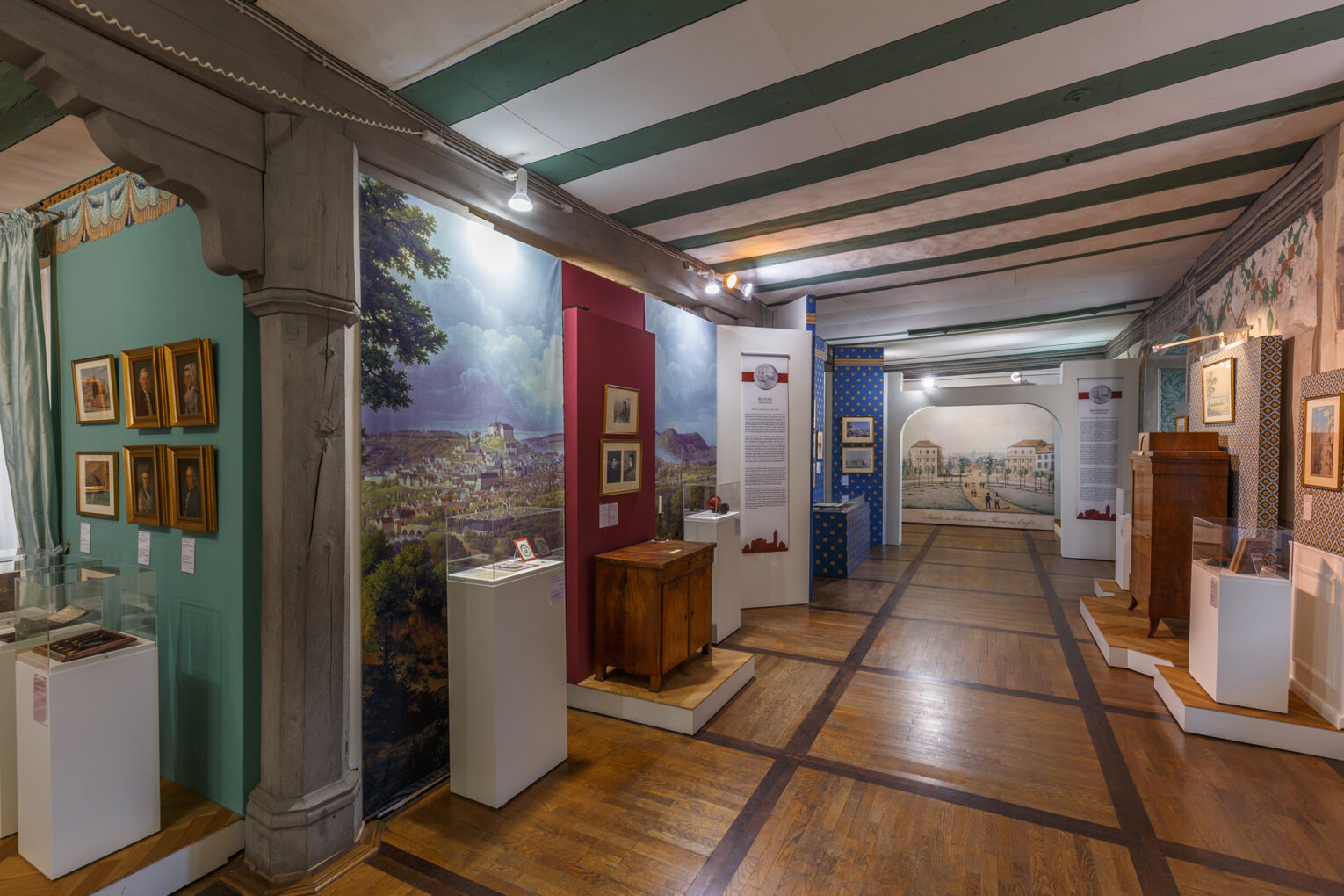
The exhibition shows, among other things, the various stages in the lives of the Brothers Grimm. Among them is the lesser-known younger brother, the artist Ludwig Emil Grimm (1790-1863).
Foto: Michael Leukel, 2020
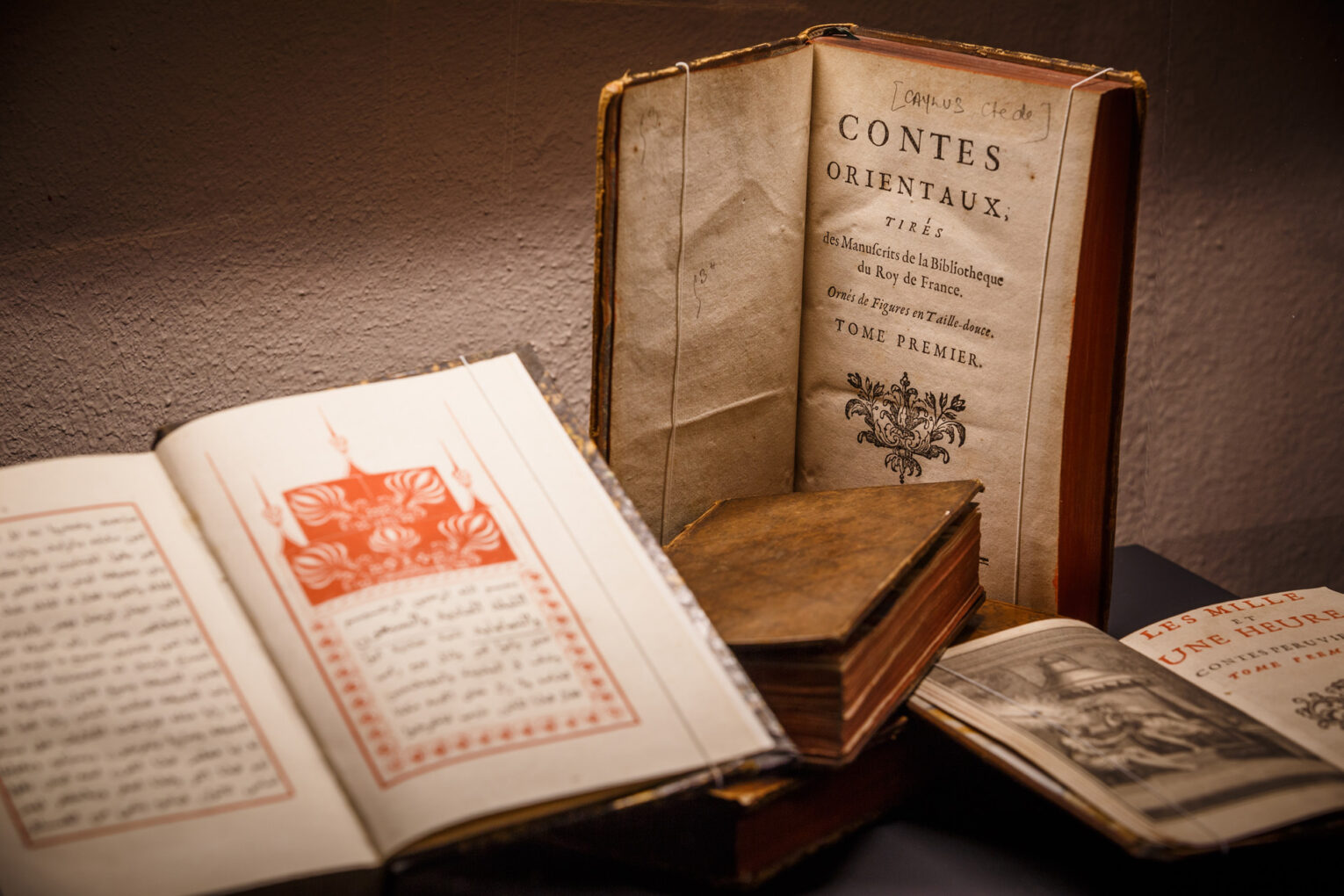
Fairy tales are folk poems. The exhibition also shows other works belonging to this literary genre.
Foto: Michael Leukel, 2019
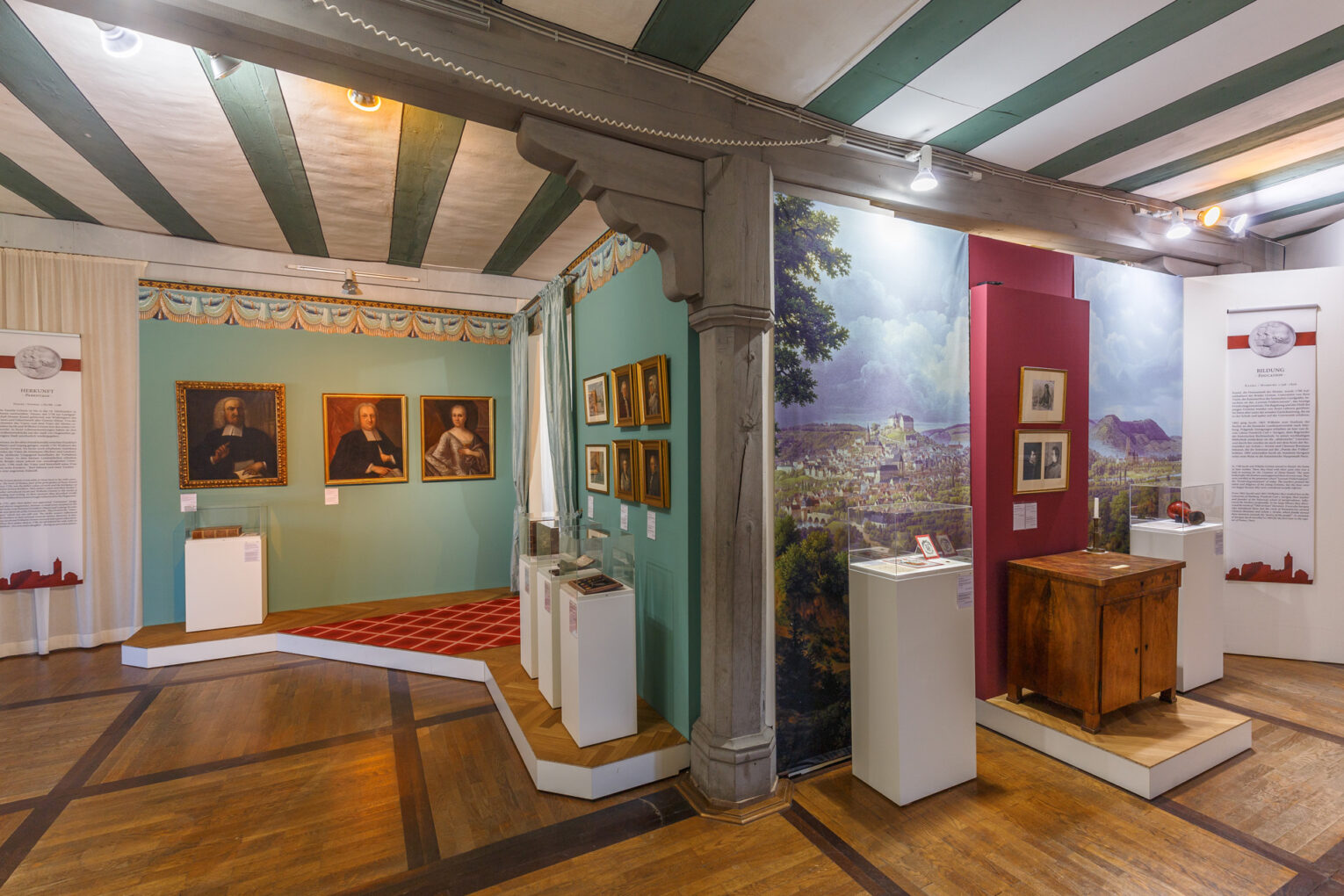
The former country town of Steinau was the “youth paradise” of the Grimms’ children. Those who have seen the palace there and also the Amtshaus (now the Brothers Grimm House), where they lived for a few years, may also like to visit the Museum GRIMMWELT in Kassel.
Foto: Michael Leukel, 2019